01 · Natural fit
What pictus catfish needs from the aquarium
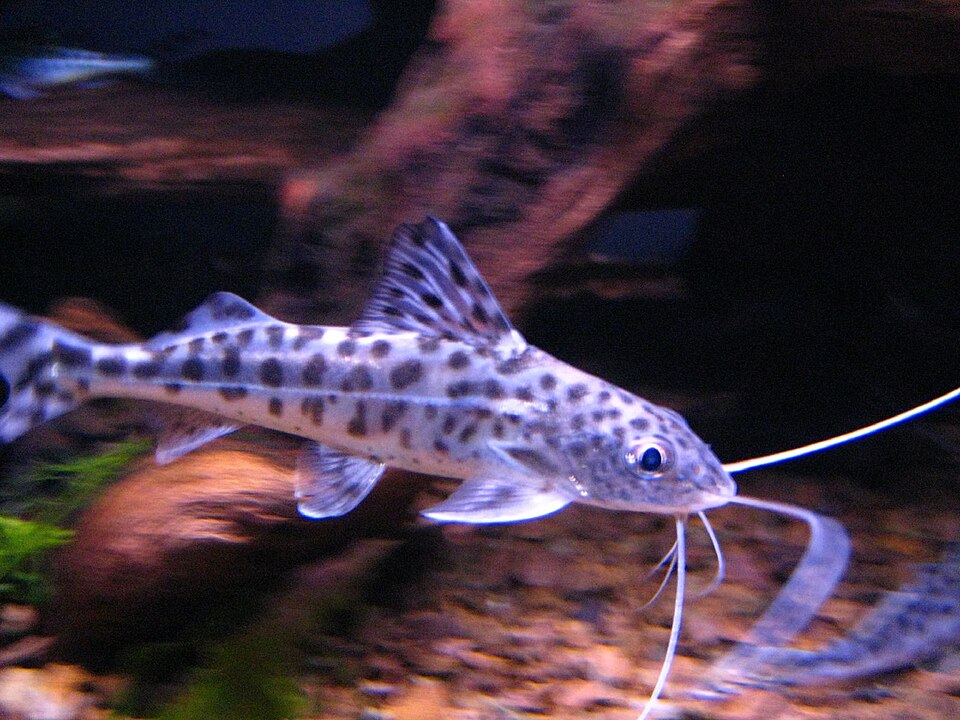
Plan around the adult animal, not the size offered in a shop. AquaDepth uses a conservative starting footprint of 200 litres and 120 cm of swim length for this bottom / midwater inhabitant. A longer tank can be more useful than a taller one when movement and territory are the limiting factors.
The reviewed working range is 22–28°C, pH 6–8 and GH 5–18. Stability, oxygenation and gradual change remain important even inside those numbers. Where source ranges disagree, the narrower overlap is the safer planning target.
02 · Behaviour
Space, group size and daily rhythm
This profile classifies the species as predatory and mainly bottom / midwater. A minimum social group of 3 is used here; a larger group can be appropriate when the footprint and filtration support it.
Use planting, wood or rock to create retreat and visual separation without removing open movement space. Feed where this animal can reach food naturally, and check that faster companions do not take the entire ration.
03 · Compatibility
Build the community around constraints
Match temperature, pH and hardness first. Then compare adult size, mouth size, fin shape, territory, activity and feeding speed. Similar numbers do not erase behavioural risk, and a large filter cannot solve predation or chronic harassment.
Promising direction
Species using different zones with overlapping water and comparable adult robustness.
Review closely
Long fins, shared caves, large size differences, breeding territory or competition at feeding time.
04 · Common mistakes
Where plans go wrong
- Buying juveniles without reserving the adult footprint.
- Treating a minimum group as a stocking target independent of tank length.
- Matching temperature but ignoring behaviour, mineral needs or feeding access.
- Using a bioload estimate as proof that the community is humane.
05 · Evidence
Sources and review status
Scientific naming and husbandry ranges were cross-checked against the references below. This profile has moderate confidence pending an independent specialist review. Source disagreement is handled conservatively.
Last reviewed 2026-07-31 · AquaDepth Editorial · Review methodology