Candidate
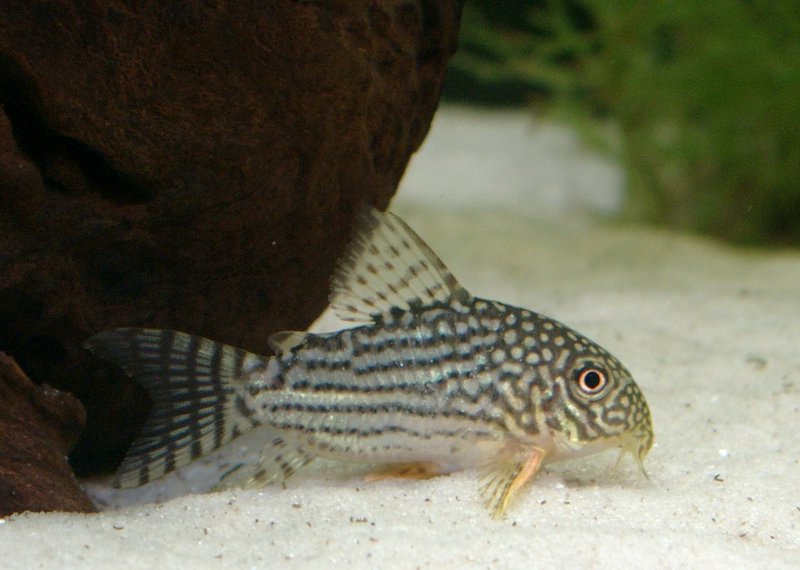
Sterbai corydoras
Corydoras sterbai
Open full care profile →Photo identification · reviewed 2026-07-31
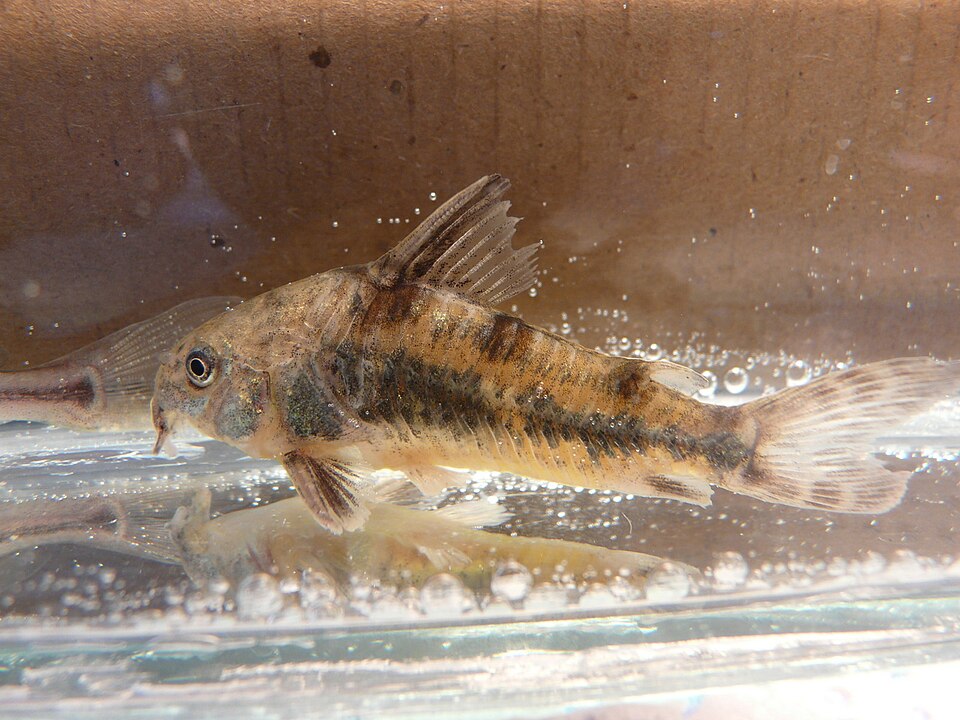
Read the pattern direction and pectoral-fin colour: these lookalikes sit at opposite ends of common cory temperature choices.
Candidate
Corydoras sterbai
Open full care profile →Candidate
Corydoras paleatus
Open full care profile →Interactive observation guide
Use the photographs above, then select each clue. Do not make an identification from one feature alone.
Sterbai corydoras show pale spots on a dark head, with a more reticulated body pattern.
Care reality check
A visual identification changes which limits you should plan around.
| Requirement | Sterbai corydoras | Peppered corydoras |
|---|---|---|
| Adult size | 6–7 cm | 5–7 cm |
| Minimum tank | 75 L · 80 cm | 75 L · 80 cm |
| Temperature | 24–30°C | 18–26°C |
| pH | 6–7.5 | 6–8 |
| GH | 2–10 dGH | 5–19 dGH |
| Social minimum | 6 | 6 |
| Temperament | peaceful | peaceful |
Visible differences
Shared traits
Why it matters
Sterbai are suited to much warmer water; peppered corydoras are a cooler-water choice.
Uncertainty
Juvenile pattern and photography white balance can mislead. Confirm the scientific name before matching a warm community.