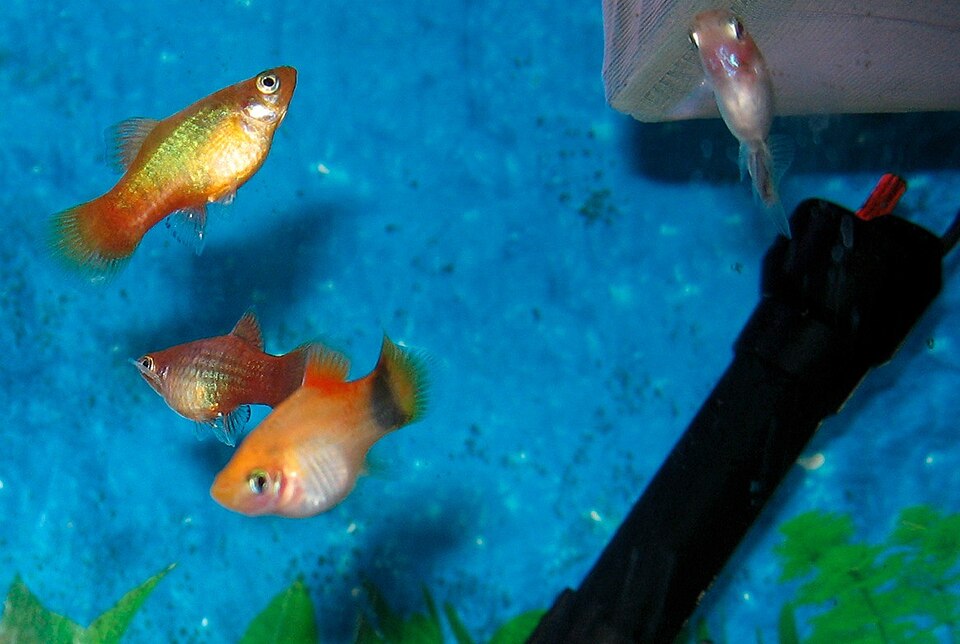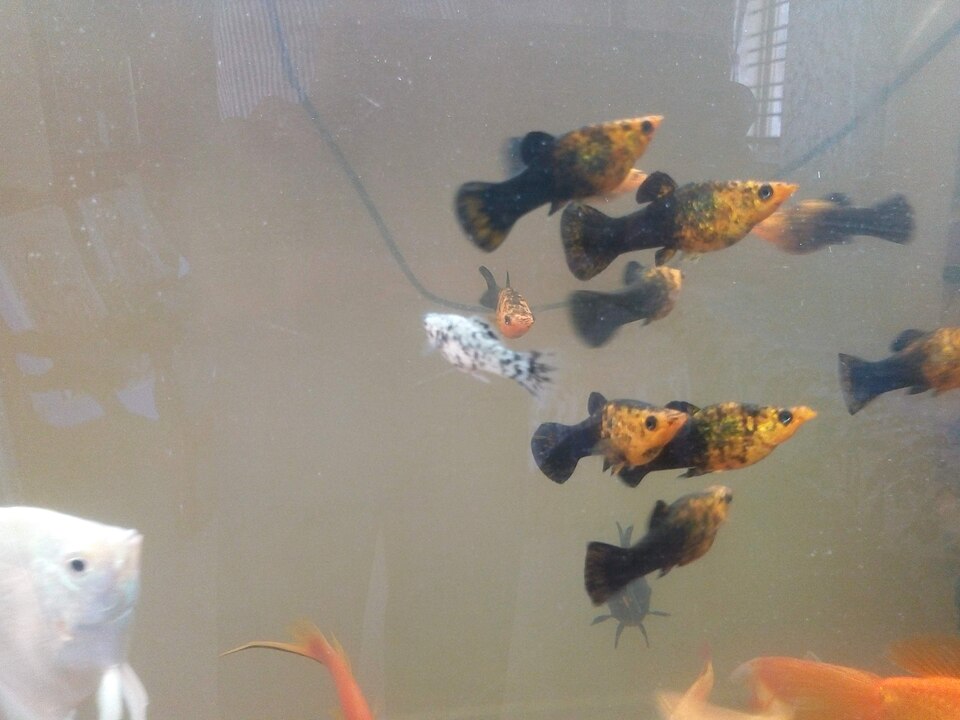
Candidate
Molly
Poecilia sphenops
Open full care profile →Photo identification · reviewed 2026-07-31
Compare body length, snout and dorsal fin rather than relying on colour, which varies enormously in both livebearers.
Candidate
Poecilia sphenops
Open full care profile →Candidate
Xiphophorus maculatus
Open full care profile →Interactive observation guide
Use the photographs above, then select each clue. Do not make an identification from one feature alone.
Platies are typically shorter and deeper-bodied with a compact, blunt profile.
Care reality check
A visual identification changes which limits you should plan around.
| Requirement | Molly | Platy |
|---|---|---|
| Adult size | 6–10 cm | 4–7 cm |
| Minimum tank | 75 L · 75 cm | 60 L · 60 cm |
| Temperature | 24–28°C | 20–26°C |
| pH | 7.2–8.5 | 7–8.2 |
| GH | 12–30 dGH | 10–30 dGH |
| Social minimum | 3 | 3 |
| Temperament | peaceful | peaceful |
Visible differences
Shared traits
Why it matters
Mollies need more swimming length, warmer water and stronger mineral support than a casual 'livebearer' label suggests.
Uncertainty
Hybrid strains, pregnancy and selective breeding distort body shape. Use shape plus shop provenance, not colour names.