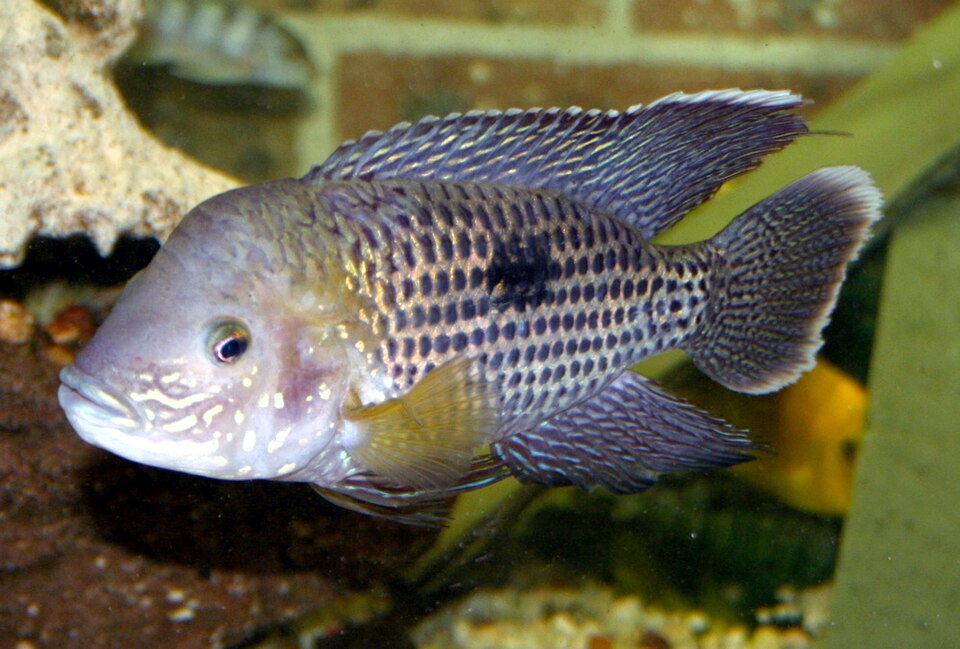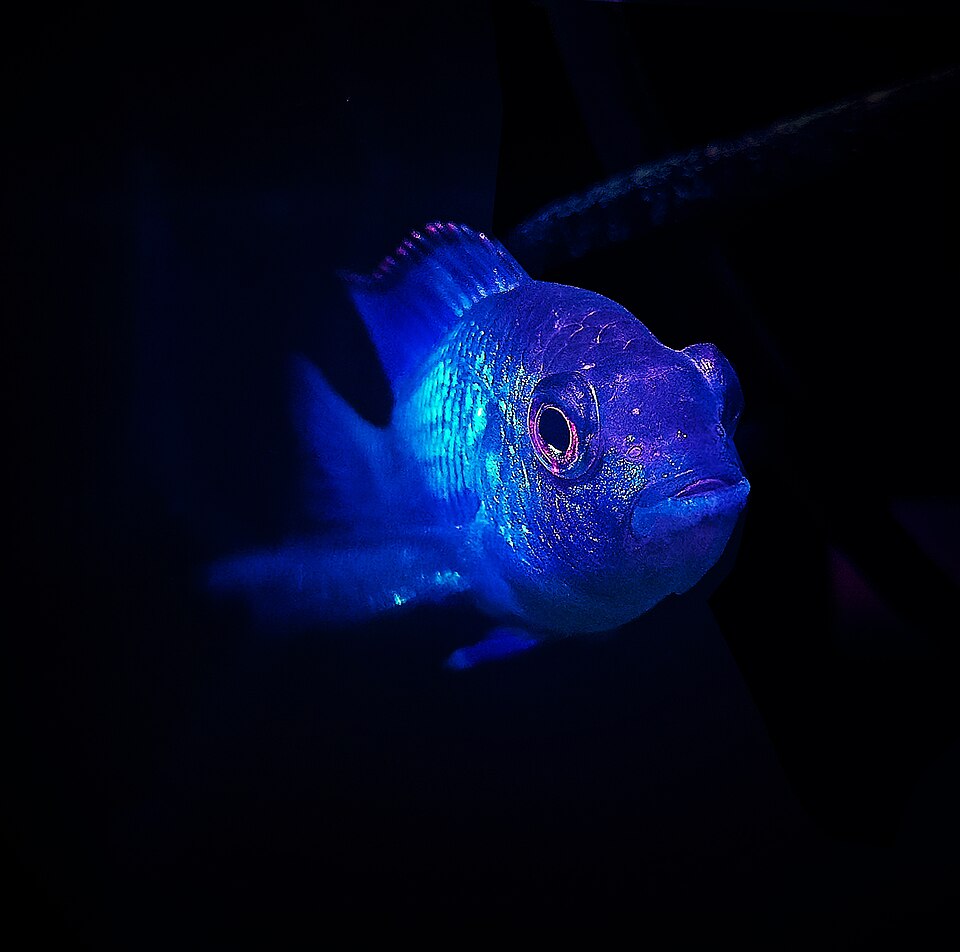
Candidate
Electric blue acara
Andinoacara pulcher
Open full care profile →Photo identification · reviewed 2026-07-31
Face markings, fin edging and body proportions help separate two blue-green cichlids with very different aggression risk.
Candidate
Andinoacara pulcher
Open full care profile →Candidate
Andinoacara rivulatus
Open full care profile →Interactive observation guide
Use the photographs above, then select each clue. Do not make an identification from one feature alone.
Electric blue acaras have an intense, relatively even blue spangling and a rounder, less heavy head profile.
Care reality check
A visual identification changes which limits you should plan around.
| Requirement | Electric blue acara | Green terror cichlid |
|---|---|---|
| Adult size | 12–16 cm | 20–30 cm |
| Minimum tank | 150 L · 100 cm | 300 L · 150 cm |
| Temperature | 23–28°C | 22–28°C |
| pH | 6–8 | 6.5–8 |
| GH | 5–20 dGH | 8–25 dGH |
| Social minimum | 1 | 1 |
| Temperament | semi-aggressive | aggressive |
Visible differences
Shared traits
Why it matters
Green terrors grow larger and present a much higher territorial risk, making misidentification a serious stocking error.
Uncertainty
Juveniles and hybrid domestic strains can be ambiguous. Seek provenance and plan for the more demanding possibility until confirmed.